
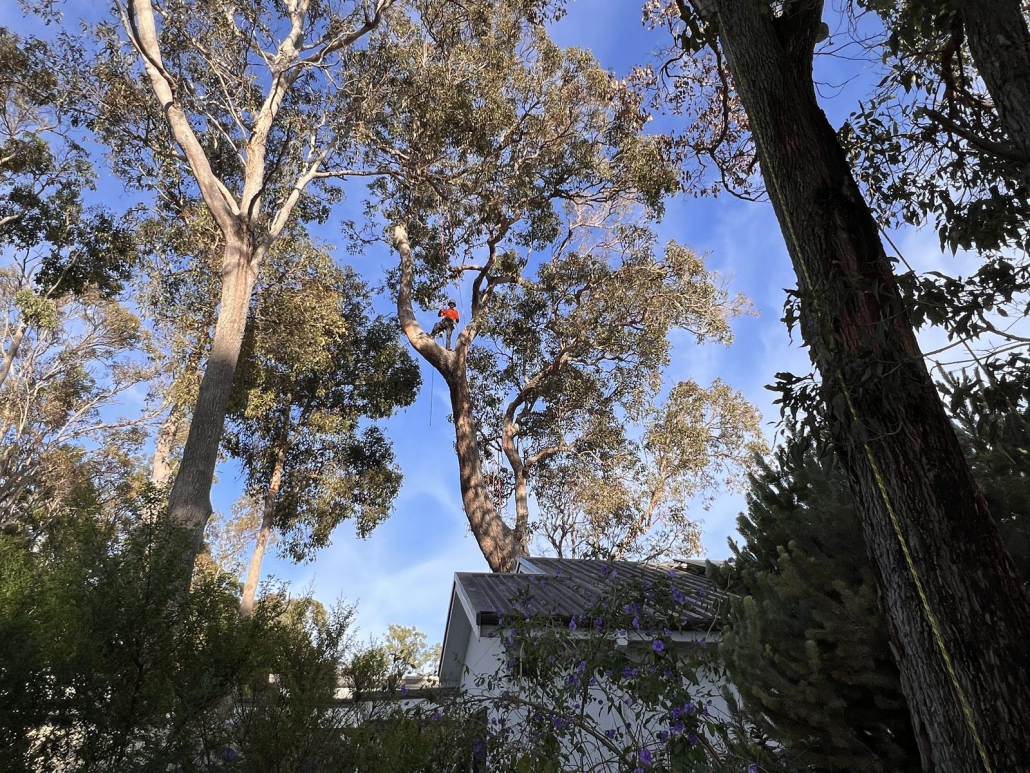
Tree health starts from the ground up
Across WA’s South-West, trees are a big part of what makes the place feel like home. From towering karri, marri and jarrah to peppermint trees closer to the coast, healthy trees shape our landscapes, provide habitat, and add real value to properties. But when trees start to struggle, it’s often not the canopy telling the full story. More often than not, it comes back to what’s happening below ground.
The team of qualified arborists at South West Tree Services have been working with local trees for more than a decade, and one thing is clear: good tree health starts with good soil health.
Why soil health matters for tree health
A lot of people focus on what they can see – leaves, branches, dead wood – but the real engine room of tree health is the soil. Our native trees evolved in forest systems where organic matter is constantly falling, rotting down and feeding the soil.
“Trees in the bush aren’t growing in bare dirt or lawn,” says South West Tree Services director Glen Taylor. “They’re growing in layers of leaf litter, bark and decaying wood. That’s what builds healthy soil, and healthy soil grows healthy trees.”
In the Margaret River region and towns in the greater South-West, many properties sit on sandy or gravelly soils that drain quickly and don’t naturally hold nutrients. Without organic matter, tree health can decline slowly over time.
Aged mulch is best, as it has already begun breaking down and feeding the soil, while fresh mulch can temporarily draw nitrogen from the soil as it decomposes.
The role of whole tree mulch
One of the simplest and most effective ways to improve both soil health and tree health is regular whole tree mulching.
Whole tree mulch – made from chipped branches, leaves and wood – mimics what happens on the forest floor. As it breaks down, it feeds soil organisms, improves moisture retention and supports beneficial fungi.
“Whole tree mulch breaks down nicely without robbing the soil,” Glen explains. “It’s about rebuilding that natural system around the tree, especially for our native species.”
Grass, on the other hand, competes directly with tree roots for water and nutrients. Replacing lawn with mulch around trees can make a noticeable difference within a season or two.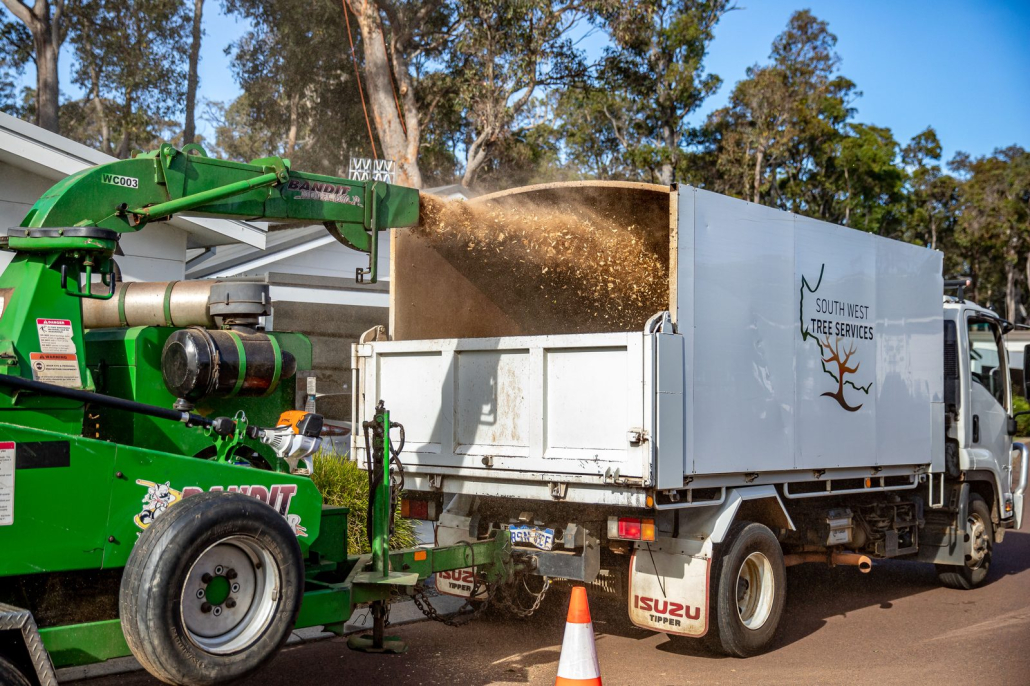
Understanding the critical root zone
A big part of protecting tree health is understanding the critical root zone — the area of soil a tree relies on most for water, nutrients and stability.
A simple rule of thumb is this: the size of the canopy above the ground is roughly the same size as the root system below it. Look at the spread of the branches, then imagine that same circle on the ground around the trunk. That’s the area you should protect and keep free from grass and disturbance.
“The bigger the tree, the bigger the critical root zone,” says Glen. “That’s the area you want to protect. No heavy machinery, no trenching, and ideally no grass.”
Within this zone, removing grass and applying a thick layer of whole tree mulch helps protect roots, regulate soil temperature and support long-term tree health.
Watering native trees the right way
In our local climate, overwatering can be just as harmful as underwatering. Most established native trees in the Margaret River region and the South-West are well adapted to our winter rainfall and dry summers.
“Once natives are established, they generally look after themselves,” Glen says. “You really only need to water during extended hot, dry summers – basically when we experience drought conditions.”
If watering is needed, it’s best to do a good long soak rather than frequent light watering. This encourages deeper root growth and better overall tree health.
Helping trees in decline
If a tree is showing signs of decline – thinning canopy, poor leaf colour, dieback – there are options before removal becomes necessary.
The South West Tree Services team specialise in tree treatments that focus on restoring soil health. This can include re-inoculating the soil with forest fungi to help rebuild the natural underground networks that support tree health.
“Fungi play a huge role in how trees access nutrients and water,” Glen says. “By bringing that biology back into the soil, we can often give a stressed tree a good chance of recovery.”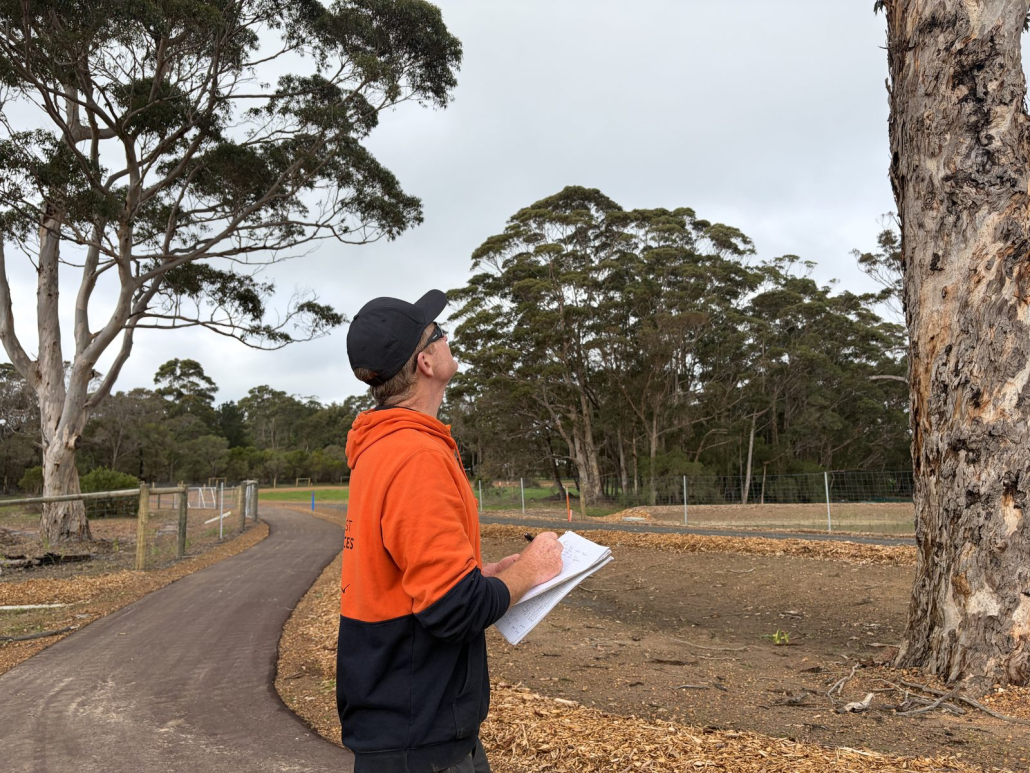
Local advice from local experts
Every site is different. Soil type, exposure, drainage and tree species all affect tree health. That’s why we also offer on-site tree inspections to assess your trees and provide practical, local advice.
Healthy trees are far better equipped to resist disease, insect attack and environmental stress. A little preventative care, especially below ground, can save a lot of trouble down the track.
As a local business operating in the Margaret River region for more than ten years, South West Tree Services understands the soils, climate and trees that make this area unique. If you want straightforward, experienced advice on tree health and soil health, we’re here to help.
See our mulching and mulch delivery and tree assessment pages, or call 0484 617 341 to book an inspection or have a chat about your trees.
